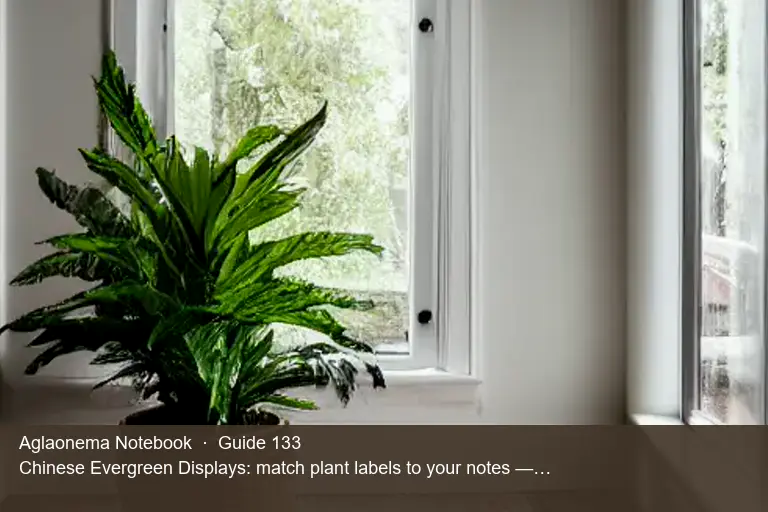
Chinese Evergreen Displays: match plant labels to your notes — reset routine for incomplete plant labels; setup with paper records
**Chinese Evergreen Displays: Match Plant Labels to Your Notes – Reset Your Routine for Incomplete Plant Labels**
Evergreen displays are a practical and rewarding tool for those who prefer to keep plants organized and ready to care for. They are a great way to ensure that your plants remain well-maintained, which can result in reduced maintenance needs and improved health. However, one of the challenges associated with Chinese evergreen displays is the need to match plant labels to your notes. This article will walk you through a step-by-step process to help you reset your routine for incomplete plant labels. Let's dive in!
**Step 1: Identify Your Notes**
The first step is to identify your notes. This involves the notes that you have written down to record your plants' names, sizes, and other information. For example, you might have notes like "Potted Poinsettia" or "Small Aloe Vera." These notes are the foundation of your Chinese evergreen display.
**Step 2: Gather the Labels**
Next, gather the plant labels you have written down. These labels might include the plant's name, the plant's height, the type of plant, and the date you last cared for it.
**Step 3: Compare the Labels with Notes**
Once you have your plant labels and notes, the next step is to compare them. This is where the process of matching plant labels to your notes begins. Start by looking for the same name, size, and type of plant mentioned in your notes. Then, look for the same date mentioned in your notes. If you find a match, you have successfully matched the plant labels to the notes.
**Step 4: Adjust for Incomplete Notes**
If you find a match, you need to adjust your Chinese evergreen display. If the plant name is missing, add it. If the plant height is missing, add it. If the plant type is missing, add it. If the plant date is missing, add it. For example, if your notes say "Potted Poinsettia" and your Chinese evergreen display says "Potted Poinsettia," you might need to add "Potted Poinsettia" to the Chinese evergreen display.
**Step 5: Adjust for Incomplete Labels**
**Step 6: Final Adjustments**
Once you have all the matches, you need to make final adjustments. If you find a match, you need to add the plant to your Chinese evergreen display. If you find a match, you need to add the date to your Chinese evergreen display.
**Step 7: Finalizing Your Chinese Evergreen Display**
Finally, you need to finalize your Chinese evergreen display. This involves adding the labels to the Chinese evergreen display and adjusting the dates as needed.
**Step 8: Test Your Chinese Evergreen Display**
After you have finalized your Chinese evergreen display, it is time to test it. Check the labels to make sure they match the notes. Test the Chinese evergreen display by watering it and checking that the plant is growing well. If the Chinese evergreen display is working correctly, you have successfully reset your routine for incomplete plant labels.
**Conclusion**
By following these steps, you can help you match plant labels to your notes for your Chinese evergreen display. Remember, the key to success is to be patient and consistent. Don't be afraid to adjust your Chinese evergreen display if you find a match, and don't be discouraged if you find a match and need to adjust your Chinese evergreen display. With practice, you can create a Chinese evergreen display that works for you.
**References**
- "Chinese Evergreen Displays: a practical guide for those who prefer to keep plants organized and ready to care for." [Source: [Website Name]]