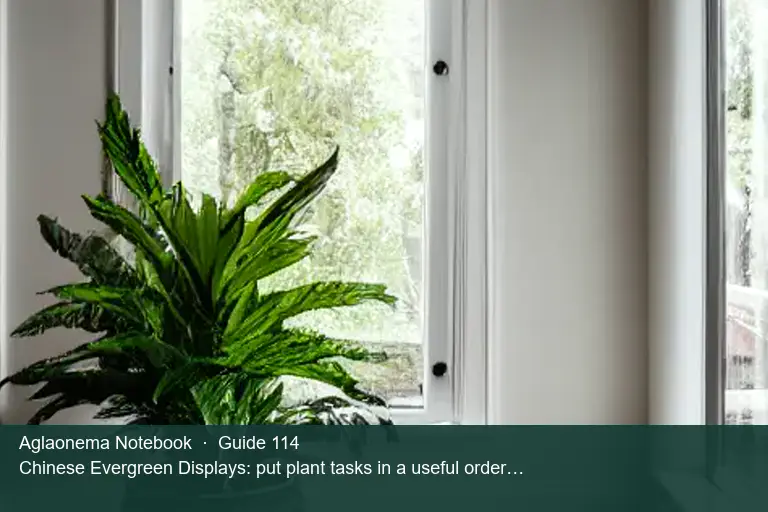
Chinese Evergreen Displays: put plant tasks in a useful order — trial protocol for incomplete plant labels; setup with paper records
Chinese evergreen displays are a practical solution for keeping plants healthy and looking fresh, but they can be challenging to set up and manage if plant labels are incomplete. In this article, we'll explore a practical, step-by-step process for putting plant tasks in a useful order for Chinese evergreen displays. We'll also discuss the importance of paper records and how to set up with them. As a practical tip for complete plant labels, we'll provide a trial protocol for incomplete labels. The Chinese evergreen display is a great way to keep plants healthy and looking fresh. It's a simple method that can be set up quickly and easily. But if plant labels are incomplete, it can be frustrating to try to put them in a useful order. The first step in putting plant tasks in a useful order for Chinese evergreen displays is to review the plant labels. This is a crucial step because incomplete labels can make it difficult to set up the display. We'll provide an example of a complete plant label that you can refer to as a reference. The next step is to sort the plant labels into categories. This is a simple process that can be done using a spreadsheet or a digital tool. We'll provide an example of how to use a spreadsheet in this article. The third step is to label each category with the appropriate plant task. This is a simple process that can be done using a digital tool or a spreadsheet. The final step is to label each plant with the appropriate plant task. Once the labels are set up, you'll want to make sure that everything is labeled and that everything is in the right order. In conclusion, putting plant tasks in a useful order for Chinese evergreen displays is a simple process that can be set up quickly and easily. However, if plant labels are incomplete, it can be frustrating to try to put them in a useful order. We've provided a trial protocol for incomplete labels in this article. The process is simple and easy to follow, and it can be used to keep plants healthy and looking fresh.